
Why NMTCs for affordable homeownership?
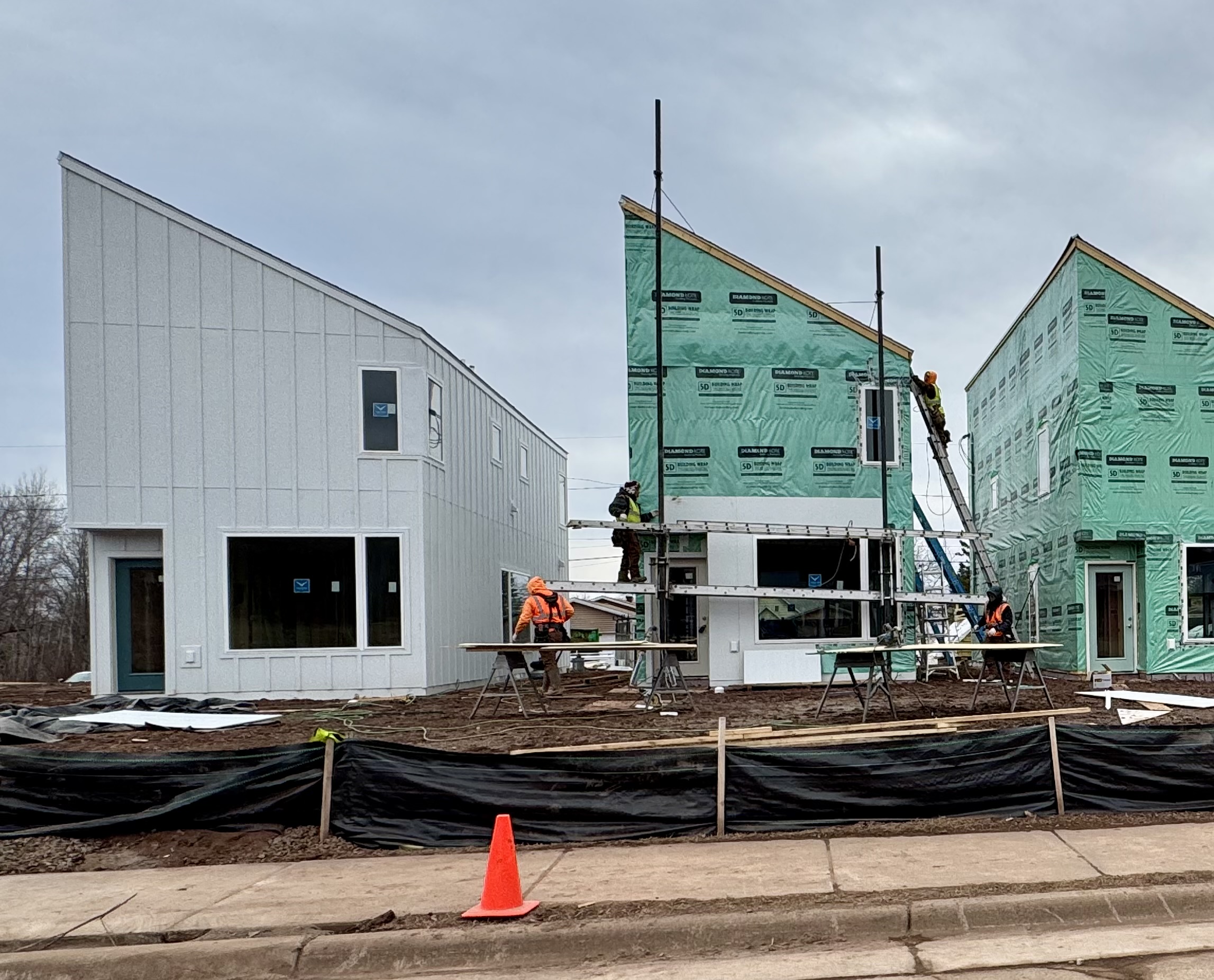
Access to quality affordable housing is extremely scarce in the United States, with home prices far outpacing family incomes, and nearly impossible for most low- and middle-income families in today’s market.
While there is no single solution to the challenge of supply, the New Markets Tax Credit (NMTC) program has proven to be a successful tool for increasing access to affordable homeownership.
Why New Markets Tax Credits?
There is currently no other federal tax credit to support the development of affordable for-sale housing. NMTCs can effectively fill affordability and market funding gaps that create barriers to affordable homeownership. New Markets Tax Credits provide an attractive and crucial financing tool for nonprofit housing developers because:
- Lack of Alternatives: High interest rates, strict lending criteria, and perceived risk factors prevent developers working in these communities from securing conventional financing at rates and terms that would enable them to sell homes affordably to low- to moderate-income buyers.
- Flexibility: The flexible features of NMTC loans enable nonprofit developers to produce and sell high-quality homes to low- to moderate-income buyers in a variety of markets.
- Upfront Capital: NMTCs provide critical upfront capital for pre-development, acquisition, and construction costs.
- Incentivizes Investment: Developers bring 2/3 of the NMTC funded loan amount to the project and receive tax credit equity of 1/3 from the private tax credit investors.
Why homeownership?
Homeownership is economic development, NMTC-supported affordable for-sale housing developments:
- Create Jobs: Building and rehabbing homes for sale creates construction jobs and training opportunities, and bolsters businesses that support the construction industry.
- Attract Businesses: A variety of quality employee housing is necessary for a community to attract businesses.
- Generate Economic Activity: The construction and sale of homes generates state and local revenue through construction fees, and property and sales taxes. Homeowners have more discretionary income than renters to spend at local community businesses.
- Benefit Homeowners: Home equity is the largest asset households can leverage to start businesses, invest in training or higher education, and prepare for financial emergencies. Homeownership contributes toward better health and education outcomes, especially for children.
- Stabilize Neighborhoods: Homeownership development improves neighborhoods by removing vacant and blighted buildings, and homeownership also promotes civic and social engagement.
Increasing demand for NMTCs to develop homes
Despite a history of success and opportunity for increased impact, less than 2% of the $5 billion of NMTCs awarded in 2024 by the CDFI Fund was for affordable homeownership development. In fact, there are over 171 projects seeking more than $1 billion in NMTC allocation to develop 5,000+ affordable homeownership opportunities across the country.
Creative Solutions for Innovative Financing
Smith NMTC Associates, LLC works with mission-driven organizations throughout the country to develop creative financial models and structures for projects that bring affordable homeownership and community facilities and services to low-income communities and their residents.
In 2008, Smith NMTC Associates, LLC pioneered the first NMTC model for affordable homeownership, in collaboration with U.S. Bancorp Community Development Corporation and Habitat for Humanity International, to deploy $25 million in NMTC allocation that benefited five nonprofit developers in the Gulf Opportunity Zone after Hurricane Katrina.
As of December 19, 2025, the company has closed over $925 million in NMTC transactions, including $760 million for 160 affordable homeownership projects, in collaboration with 24 CDEs and resulting in 6,171 homes in low-income communities across 33 states and Washington, D.C.